How DPDPA Compliance Software Helps Businesses Strengthen Data Privacy and Regulatory Readiness
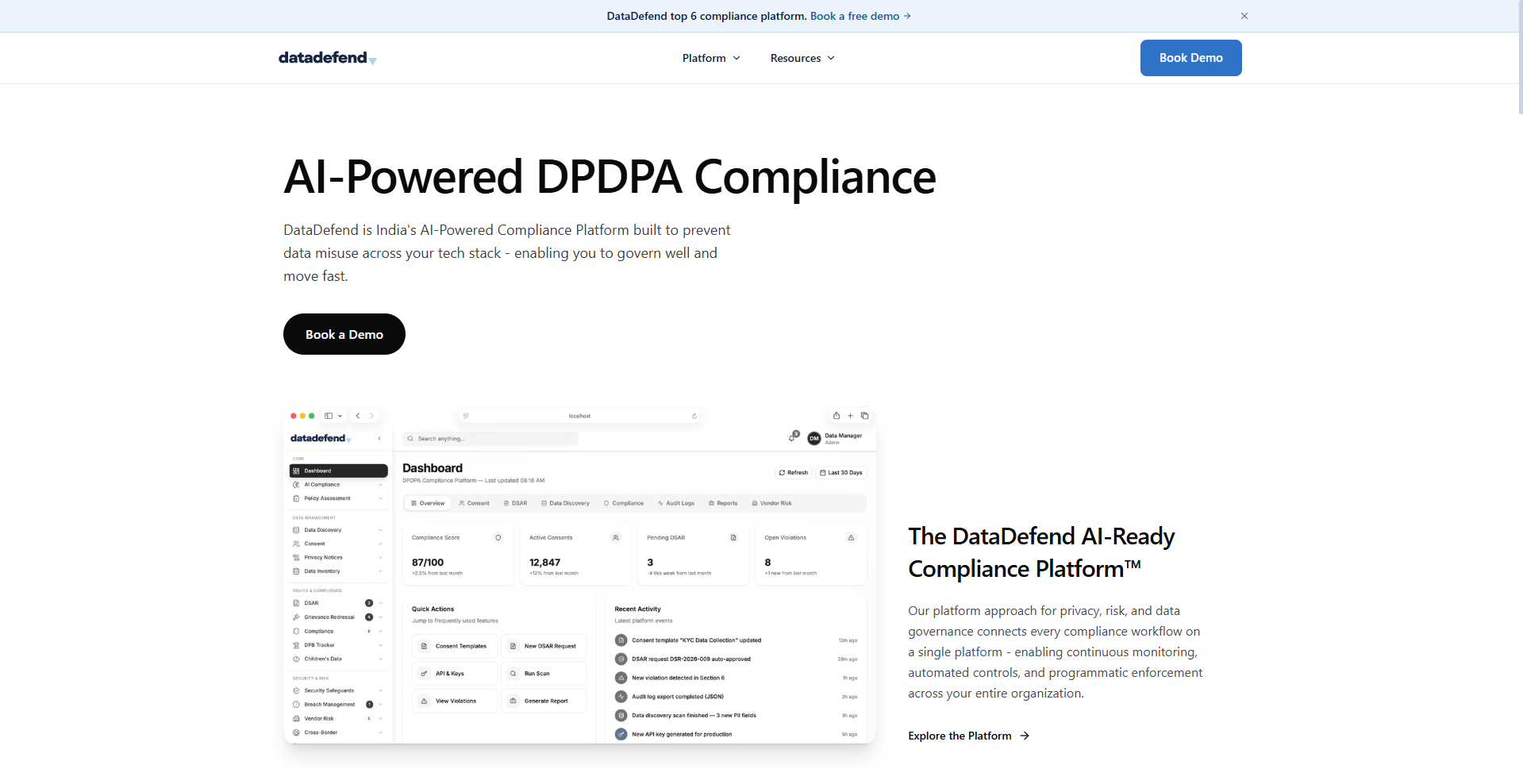
With organisations relying more on digital systems to manage personal information, ensuring responsible data handling is now a critical business requirement. The introduction of the Digital Personal Data Protection Act compliance framework has encouraged organisations to establish transparent policies, stronger security measures and accountable data governance. Consequently, companies across sectors are adopting DPDPA compliance software to simplify regulatory processes and enhance trust among customers. Platforms like Datadefend assist organisations by combining privacy management, consent tracking, automated workflows and risk assessment in one unified system. As regulations continue to evolve, adopting reliable DPDPA compliance practices enables businesses to remain prepared while protecting valuable personal information.
Why DPDPA Compliance Is Important for Modern Organisations
The Digital Personal Data Protection Act defines obligations for businesses that collect or process personal information. All businesses managing personal data must ensure it is collected for valid purposes, handled responsibly and secured against unauthorised use. Compliance goes beyond basic security controls, requiring organisations to maintain accurate records, address individual requests and demonstrate accountability across the data lifecycle.
Traditional manual compliance methods can become complex as organisations scale. Information is often scattered across applications, departments and cloud platforms, making comprehensive visibility harder to maintain. Advanced DPDPA compliance software centralises these processes, lowering administrative burden while enhancing consistency and efficiency.
Building Trust Through Effective Consent Management
A fundamental principle of privacy regulations is the transparent collection and management of user consent. Businesses must clearly explain how personal information will be used while allowing individuals to grant, withdraw or modify their preferences whenever necessary. An effective consent management platform India helps organisations keep accurate records of user permissions and ensures consent stays up to date across interactions.
Automated consent systems help eliminate outdated records, inconsistencies and incomplete documentation. It also creates a better customer experience by providing individuals with greater visibility and control over their personal information. When organisations demonstrate transparency, they strengthen customer confidence while reducing compliance risks.
Supporting Digital Personal Data Protection Act Compliance Across Departments
Data privacy responsibilities are rarely limited to one department. Departments such as legal, IT, HR, marketing and customer service each handle different types of personal data. Effective Digital Personal Data Protection Act compliance relies on coordinated collaboration supported by consistent workflows.
A comprehensive platform allows each department to follow consistent privacy procedures while maintaining central oversight. Automation simplifies the management of policies, approvals, compliance records and audit documentation. Such an approach allows organisations to minimise duplication, improve collaboration and maintain consistent compliance records.
Strengthening Data Privacy Compliance India with Automation
With increasing data volumes, automation is essential to maintain efficiency without compromising precision. Modern data privacy compliance India solutions automate repetitive privacy tasks that would otherwise require significant manual effort.
Automated systems help manage policies, classify data, maintain records, handle notifications and monitor compliance. Instead of relying on spreadsheets or disconnected systems, organisations benefit from continuous visibility into their privacy programme. Automated alerts, reports and workflow approvals help minimise errors and ensure timely completion of compliance tasks.
With lower administrative effort, organisations can invest more in strategic governance and ongoing improvements.
Streamlining Data Requests Through DSAR Automation
Individuals now expect greater transparency and access to their personal information. Companies need to handle requests for data access, correction or deletion efficiently. Manual handling of these requests can be resource-intensive, particularly for large organisations.
DSAR automation enhances efficiency by identifying data across systems, managing review workflows and recording each stage of the request. Automation reduces response times, ensures consistency and maintains detailed audit trails.
Handling requests efficiently shows accountability, vendor risk management software supports compliance requirements and enhances customer satisfaction.
Strengthening Website Privacy Using Cookie Consent Management
Websites commonly use cookies and related technologies to enhance functionality, analyse performance and personalise experiences. Organisations must provide transparency regarding these technologies while allowing visitors to make informed decisions about their preferences.
Modern cookie consent management platforms provide customisable notices, capture user preferences and ensure compliance with consent choices. Organisations gain centralised control over consent records while simplifying website compliance processes.
Efficient cookie practices help build trust by showing respect for user privacy across digital touchpoints.
Reducing Third-Party Risks with Vendor Risk Management
Many businesses rely on third-party vendors for services such as cloud computing, payments, support, analytics and development. Although these partnerships enhance efficiency, they can introduce risks if vendors do not maintain adequate security measures.
Advanced vendor risk management software assists organisations in evaluating vendor security, monitoring compliance and recording risk assessments. Automated processes, periodic assessments and central documentation make vendor oversight more efficient and informed.
An organised vendor risk strategy helps reduce risks and strengthens organisational resilience.
Key Advantages of Data Protection Software India
Using multiple disconnected tools for privacy management often leads to complexity. Organisations gain considerable advantages by adopting integrated data protection software India that unifies compliance functions.
Centralised platforms provide consistent policy enforcement, unified reporting, simplified audits and improved visibility across organisational data assets. Users benefit from real-time dashboards, automation and comprehensive records that enhance efficiency and compliance readiness.
Integrated platforms enhance collaboration across departments, enabling privacy, legal and business teams to align more effectively.
Building Long-Term Privacy Governance Strategies
Privacy regulations continue to evolve alongside technological innovation and changing customer expectations. Companies that view compliance as an ongoing effort rather than a one-off initiative are more likely to achieve sustainable growth.
Successful privacy programmes include regular policy reviews, employee awareness initiatives, continuous monitoring and periodic risk assessments. Technology solutions support these efforts with automated reporting, policy management and adaptable compliance tracking.
Organisations that build strong governance frameworks today enhance resilience and boost stakeholder confidence.
Final Thoughts
Establishing effective DPDPA compliance strategies is essential for organisations aiming to safeguard personal information and stay compliant. Platforms such as Datadefend support businesses by combining tools like DPDPA compliance software, consent management platform India, DSAR automation, cookie consent management, vendor risk management software and comprehensive data protection software India into one system. By combining automation, accountability and strong governance practices, organisations can improve operational efficiency while building lasting trust with customers, partners and stakeholders in an increasingly privacy-focused digital environment.